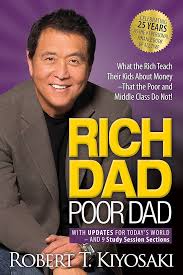
Rich Dad Poor Dad
Author: Robert T. Kiyosaki
Published: 1997
Rich Dad Poor Dad tells the story of two father figures who shaped the author’s view on money: one highly educated but financially struggling, and the other a self-made businessman with a strong focus on financial intelligence. Through their contrasting advice, the book teaches key lessons about building wealth and thinking differently about money.
The “poor dad” represents the traditional mindset: work hard, get a stable job, save money, and rely on a paycheck. In contrast, the “rich dad” encourages acquiring assets, investing, and making money work for you instead of working for money. Kiyosaki emphasizes financial education, explaining that schools teach people how to earn money but not how to manage or grow it.
A major idea in the book is the difference between assets and liabilities. Assets put money into your pocket, while liabilities take money out. The rich focus on buying income-generating assets like businesses, real estate, and investments, while the poor often accumulate liabilities they mistake for assets.
The book also highlights the importance of overcoming fear and risk, learning from failure, and developing a mindset that seeks opportunities rather than security. Kiyosaki encourages readers to take control of their financial future by continuously learning, investing wisely, and thinking long-term.
Overall, Rich Dad Poor Dad is a powerful guide to financial independence, teaching readers how to shift their mindset from earning a salary to building wealth and achieving true financial freedom.
Vigil
Author: George Saunders
Published: 2013
“Vigil” is a short story by George Saunders, first published in 2013, known for his sharp satire and emotional depth. The story takes place in a futuristic setting where a man is hired to observe and document a dying man’s final moments, reflecting themes of mortality, compassion, and the human need for connection.
Through a blend of dark humor and philosophical reflection, Saunders explores how people deal with death and the artificial systems built around it. The story highlights the tension between technology, bureaucracy, and genuine human empathy, raising questions about what it truly means to care for someone.
As the narrative unfolds, the observer becomes more aware of his own emotions and moral responsibilities, blurring the line between detached observation and personal involvement. Saunders uses this shift to show that even in a controlled, artificial environment, human feelings cannot be fully suppressed.
The story’s tone is both unsettling and thought-provoking, encouraging readers to reflect on life, death, and the ethical dimensions of how society handles both. Ultimately, “Vigil” emphasizes the importance of empathy and presence in the face of mortality, reminding us that human connection is essential even in the most artificial of systems.
Land
Author: Maggie O’Farrell
Published: 2014
“Land” is a short story by Maggie O’Farrell, first published in 2014. The story explores themes of grief, memory, and human connection through a deeply emotional and symbolic narrative style. O’Farrell is known for her sensitive portrayal of relationships and inner emotional worlds, which is reflected strongly in this work.
The story follows characters who are dealing with loss and the complex emotions that come with it. Through subtle storytelling, O’Farrell reveals how past experiences continue to shape the present, and how people struggle to cope with absence and change. The narrative often moves between moments and memories, creating a layered and reflective reading experience.
A key theme in “Land” is the idea of connection both to other people and to the past. The story shows how relationships, even after they end or change, continue to influence a person’s identity and emotional state. O’Farrell uses delicate language and imagery to express these invisible bonds.
Another important element is the exploration of vulnerability. The characters are portrayed in a realistic and human way, showing both strength and fragility as they navigate their emotions. This adds depth to the story and allows readers to empathize with the characters’ experiences.
Overall, “Land” is a powerful example of literary fiction, offering a thoughtful and emotional exploration of loss, memory, and the enduring impact of human relationships.
Exit Party
Author: Emily St. John Mandel
Published: 2014
“Exit Party” is a short story by Emily St. John Mandel, published in 2014. The story reflects her signature style of quiet, reflective storytelling, often exploring themes of isolation, human connection, and the passage of time.
The narrative follows characters attending a party that carries an underlying sense of finality and emotional tension. Beneath the surface of ordinary conversation and social interaction, there is a subtle awareness of endings whether personal, emotional, or symbolic. Mandel uses this setting to examine how people behave when faced with uncertainty or change.
A central theme in the story is the idea of transition. The “exit” in the title suggests not just a physical departure, but also emotional or life changes, highlighting how people move in and out of each other’s lives. The story gently explores how individuals cope with endings and how moments of connection can be both fleeting and meaningful.
Mandel’s writing style is calm and atmospheric, focusing more on mood and internal reflection than dramatic action. This allows readers to engage deeply with the characters’ thoughts and emotions, creating a sense of intimacy and realism.
Overall, “Exit Party” is a subtle yet powerful piece of literary fiction that explores themes of endings, human connection, and the quiet moments that define our lives.
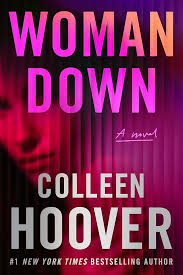
Woman Down
Author: Colleen Hoover
Published: 2022
“Woman Down” is a short story by Colleen Hoover, published in 2022. The story reflects Hoover’s signature style of intense emotional storytelling, focusing on relationships, trauma, and personal healing.
The narrative follows a woman who is emotionally and physically affected by a difficult relationship, exploring the struggles she faces as she tries to reclaim her sense of self. Through her experiences, Hoover highlights themes of vulnerability, strength, and resilience in the face of hardship.
A central theme in the story is empowerment. The protagonist’s journey represents the process of recognizing one’s own worth and finding the courage to move forward despite pain and past struggles. The story emphasizes that healing is not immediate, but a gradual process that requires inner strength and self-awareness.
Another important aspect is the emotional complexity of relationships. Hoover portrays how love can sometimes coexist with pain, and how difficult it can be to separate oneself from harmful situations. This adds depth and realism to the narrative, making the reader reflect on the nature of human connections.
Overall, “Woman Down” is a powerful and emotional story that explores trauma, resilience, and personal growth, delivering a message of strength and the importance of self-worth.
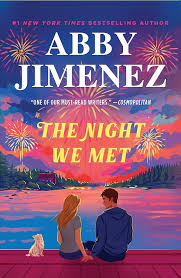
The Night We Met
Author: Abby Jimenez
Published: 2022
“The Night We Met” is a short story by Abby Jimenez, published in 2022. The story carries her signature blend of heartfelt romance, emotional depth, and relatable characters.
The narrative centers on two individuals whose lives intersect on a meaningful night, creating a connection that feels both unexpected and significant. Through their interaction, the story explores how a single moment can influence the course of a person’s life and shape future relationships.
A key theme in the story is fate versus choice. It raises the question of whether relationships are guided by destiny or by the decisions people make. The connection between the characters feels natural and genuine, yet it also highlights the uncertainty and vulnerability involved in forming new bonds.
Another important theme is emotional healing. The characters bring their past experiences and personal struggles into their meeting, and through their interaction, they begin to understand themselves and each other more deeply. This reflects Jimenez’s focus on growth, empathy, and second chances.
Overall, “The Night We Met” is a touching and romantic story that captures the beauty of human connection, the power of a single moment, and the possibility of new beginnings.
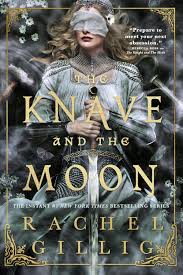
The Knave and the Moon
Author: Rachel Gillig
Published: 2022
“The Knave and the Moon” is a short story by Rachel Gillig, published in 2022. The story reflects Gillig’s signature style, combining dark fantasy elements with emotional depth and lyrical writing.
Set in a mysterious and atmospheric world, the story follows characters whose lives are shaped by secrets, destiny, and the influence of powerful forces. The narrative blends fantasy with introspection, creating a tale that feels both magical and deeply personal.
A central theme in the story is identity and transformation. The characters face internal and external challenges that force them to confront who they are and who they are becoming. This journey of self-discovery is a key element in Gillig’s storytelling, often set against a backdrop of danger or enchantment.
Another important theme is the balance between light and darkness. The “moon” in the title symbolizes guidance, mystery, and change, while the “knave” suggests trickery, rebellion, or unpredictability. Together, they represent the tension between opposing forces within the story and within the characters themselves.
Overall, “The Knave and the Moon” is a richly atmospheric and emotional fantasy story that explores identity, transformation, and the delicate balance between light and darkness.

The Flower Bearers
Author: Rachel Eliza Griffiths
Published: 2022
“The Flower Bearers” is a short story by Rachel Eliza Griffiths, published in 2022. The story reflects her lyrical and poetic style, blending vivid imagery with emotional depth and social awareness.
The narrative centers on themes of identity, memory, and community, often exploring how individuals are shaped by their surroundings and experiences. Griffiths uses rich, descriptive language to create a strong sense of atmosphere, allowing readers to feel deeply connected to the characters and their world.
A key theme in the story is resilience. The characters navigate personal and collective challenges, showing strength in the face of adversity. Through their journeys, the story highlights the importance of cultural roots, shared history, and human connection.
Another important aspect is the symbolic use of flowers, which can represent beauty, fragility, remembrance, and transformation. This imagery adds layers of meaning to the narrative, encouraging readers to reflect on both loss and renewal.
Overall, “The Flower Bearers” is a thoughtful and evocative piece of literary fiction that combines poetic language with powerful themes, offering a reflective and emotionally rich reading experience.
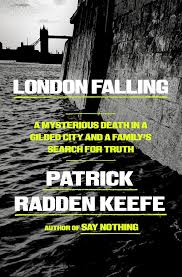
London Falling
Author: Patrick Radden Keefe
Published: 2022
“London Falling” is a short story by Patrick Radden Keefe, published in 2022. The story reflects his skill in blending investigative insight with compelling narrative, creating a tense and thought-provoking piece.
Set against the backdrop of London, the narrative explores themes of power, secrecy, and the hidden structures that shape society. Keefe brings a realistic tone to the story, drawing on his experience in journalism to create a world that feels authentic and grounded.
A key theme in the story is the idea of unseen influence how decisions made behind closed doors can impact entire communities. The story examines the intersection of politics, wealth, and morality, raising questions about accountability and truth.
Another important aspect is tension and atmosphere. The title itself suggests decline or collapse, and throughout the narrative there is a sense of unease, as if something significant is about to change or be revealed. This builds suspense and keeps the reader engaged.
Overall, “London Falling” is a gripping and intelligent story that combines realism with suspense, offering insight into power dynamics and the complexities of modern society.
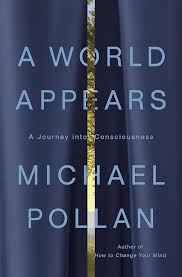
A World Appears
Author: Michael Pollan
Published: 2022
“A World Appears” is a short story by Michael Pollan, published in 2022. The story reflects Pollan’s thoughtful and philosophical style, often blending science, nature, and human perception.
The narrative explores the idea of how humans perceive and interact with the world around them, questioning what is real and how reality is constructed in the mind. Through a reflective tone, Pollan examines the relationship between consciousness and the environment, inviting readers to reconsider ordinary experiences.
A central theme in the story is awareness. It suggests that the world we see is not fixed, but shaped by our senses, thoughts, and attention. This idea connects to broader philosophical and scientific discussions about perception and reality.
Another important aspect is the connection between humans and nature. Pollan often highlights how deeply intertwined people are with the natural world, even when they feel separate from it. This adds a layer of meaning to the story, emphasizing unity and interdependence.
Overall, “A World Appears” is a reflective and thought-provoking piece that encourages readers to question reality, deepen their awareness, and appreciate the complexity of perception and existence.
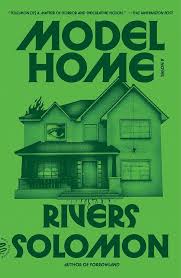
Model Home
Author: Rivers Solomon
Published: 2022
“Model Home” is a short story by Rivers Solomon, published in 2022. The story reflects Solomon’s unique style, blending speculative elements with deep emotional and social themes.
The narrative is set in a seemingly perfect, controlled environment a “model home” that represents an idealized version of life. Beneath this polished surface, however, the story reveals tension, discomfort, and the pressure to conform to unrealistic standards.
A central theme in the story is identity. The characters struggle with expectations placed upon them, questioning who they are versus who they are supposed to be. This conflict highlights the impact of societal norms and the difficulty of maintaining individuality in a structured environment.
Another important theme is illusion versus reality. The “model home” symbolizes perfection and stability, but as the story unfolds, it becomes clear that this perfection is artificial and fragile. Solomon uses this contrast to critique societal ideals and the cost of maintaining appearances.
Overall, “Model Home” is a thought-provoking and layered story that explores identity, conformity, and the hidden cracks beneath seemingly perfect lives, offering a powerful reflection on modern society.
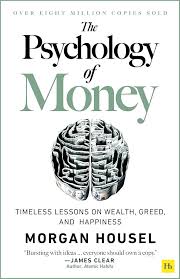
The Psychology of Money
Author: Morgan Housel
Published: 2020
The Psychology of Money by Morgan Housel explores how people think about money and how behavior plays a bigger role in financial success than intelligence or technical knowledge. The book is built on the idea that managing money is less about formulas and more about mindset, habits, and emotions.
Housel explains that people from different backgrounds make different financial decisions based on their personal experiences, which means there is no single “correct” way to handle money. He emphasizes that doing well with money is not necessarily about being smart, but about being consistent, patient, and avoiding big mistakes.
One of the key lessons is the power of compounding. Small, consistent actions over time can lead to huge results, especially when combined with patience. The book also highlights the importance of saving, not just for specific goals, but to gain freedom and control over your life.
Another important idea is that wealth is what you don’t see. Many people spend money to look rich, but true wealth is built quietly by saving and investing. Housel encourages readers to focus less on showing success and more on building long-term security.
Overall, The Psychology of Money is a powerful guide that teaches how to build a healthy relationship with money, focusing on behavior, patience, and long-term thinking rather than quick success.
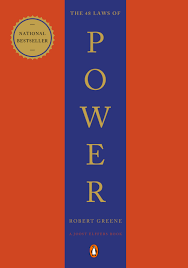
The 48 Laws of Power
Author: Robert Greene
Published: 1998
The 48 Laws of Power by Robert Greene is a guide to understanding power, influence, and human behavior. The book presents 48 laws drawn from history, philosophy, and real-life examples, showing how power is gained, maintained, and sometimes lost.
Greene explains that power is often hidden beneath social interactions, and those who understand it can navigate life more strategically. Each law offers insight into human nature such as controlling emotions, protecting your reputation, and learning when to speak or stay silent.
A key idea in the book is that perception matters more than reality. People judge based on appearances, so managing how others see you is a powerful tool. Another major lesson is to avoid unnecessary conflict and instead use patience, timing, and indirect strategies to achieve your goals.
The book also emphasizes the importance of understanding others their desires, weaknesses, and motivations. By doing so, a person can influence situations more effectively and avoid being manipulated by others.
However, the book is often seen as controversial because some laws encourage manipulation or ruthless behavior. It is best understood as a study of how power works in the real world, rather than a strict guide on how one should behave.
Overall, The 48 Laws of Power provides deep insight into strategy and influence, helping readers become more aware of social dynamics and better prepared to handle complex situations.
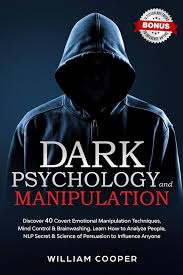
Dark Psychology and Manipulation
Author: William Cooper
Published: 2019
Dark Psychology and Manipulation by William Cooper explores the darker side of human behavior, focusing on how people can influence, control, or manipulate others through psychological tactics. The book presents various methods of persuasion and manipulation that can be used in social, personal, or professional situations.
A central idea in the book is awareness. It explains how manipulation often works subtly, using emotions such as fear, guilt, or desire to influence decisions without the person realizing it. Techniques like gaslighting, emotional manipulation, and deceptive persuasion are discussed as ways some individuals attempt to gain control over others.
Another important theme is protection. While the book describes these tactics, it also helps readers recognize and defend against them. By understanding how manipulation works, a person can develop stronger boundaries, better emotional control, and improved decision-making skills.
The book also touches on personality types, such as narcissistic or highly manipulative individuals, and how they may behave in relationships. It emphasizes the importance of critical thinking and staying alert in interactions to avoid being influenced unfairly.
Overall, Dark Psychology and Manipulation serves as a guide to understanding hidden psychological influences, helping readers become more aware, cautious, and resilient in dealing with others.
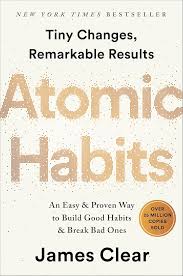
Atomic Habits
Author: James Clear
Published: 2018
Atomic Habits by James Clear focuses on how small, consistent actions can lead to remarkable long-term results. The book explains that success is not the result of massive changes, but the accumulation of tiny improvements made every day.
A key concept in the book is the idea of “1% improvement.” Clear argues that improving just a little each day can compound over time, leading to significant progress. On the other hand, small negative habits can also compound and create negative outcomes.
The book introduces a four-step model for building habits: cue, craving, response, and reward. By understanding this cycle, readers can design better habits and break bad ones. For example, making good habits obvious, attractive, easy, and satisfying increases the chances of success.
Another important theme is identity. Clear suggests that lasting change happens when people focus on becoming the type of person they want to be, rather than just achieving a goal. For instance, instead of saying “I want to run,” you become “a runner.”
The book also highlights the importance of environment. Changing your surroundings can make good habits easier and bad habits harder, which helps shape behavior more effectively than willpower alone.
Overall, Atomic Habits is a practical and powerful guide to building good habits, breaking bad ones, and achieving long term success through small, consistent actions.
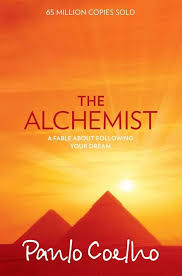
The Alchemist
Author: Paulo Coelho
Published: 1988
The Alchemist by Paulo Coelho is a philosophical novel about a young shepherd named Santiago who dreams of discovering a hidden treasure. His journey begins in Spain and leads him across deserts and into the mysterious lands of Egypt, where he learns valuable life lessons along the way.
A central theme of the story is the “Personal Legend,” which represents a person’s true purpose in life. Santiago’s journey shows that when someone truly desires something and works toward it, the universe seems to help guide them. This idea encourages readers to follow their dreams and trust their path.
The novel also emphasizes listening to one’s heart and recognizing the signs that life provides. Santiago learns that intuition and inner guidance are important in making decisions, even when the path is uncertain.
Another key message is that the journey itself is just as important as the destination. Through his experiences, Santiago gains wisdom, courage, and understanding, which are more valuable than the treasure he seeks.
The story explores themes of love, destiny, and self-discovery, teaching that true fulfillment comes from pursuing one’s dreams and understanding one’s place in the world.
Overall, The Alchemist is an inspiring and symbolic novel that encourages readers to follow their dreams, trust the journey, and discover the deeper meaning of life.